
Our Story
Celebrating the Art of American Song
Our Mission: American Traditions celebrates and preserves all styles of classic American music. Through musical education, community events, concerts, and our annual vocal competitions for regional high schoolers and professional vocalists, the ATC keeps classic genres of American music alive.
The root of it
American music is a mix of the identities, cultures, languages and musics of the people who inhabit our country. Whether people are native to this land, or arrived to the United States of America through immigration or forced enslavement, our country’s music tells our country’s story. Significantly, we cannot talk about American music without recognizing the contributions of Black Americans. Gospel, Blues, Jazz, and Soul carry the deep imprint of Black Americans on this country's music and its history. These genres came from the rhythmic traditions of West Africa and the West Indies, met European styles of composition, and became the foundation nearly every American style is built on. They shaped the sound of our nation, and their reverberations have created the colorful palette of American music beloved around the world.
The American Traditions Competition was founded as a stage for Black women to sing Black American music, and that root still runs through everything we do.
What makes our professional competition different
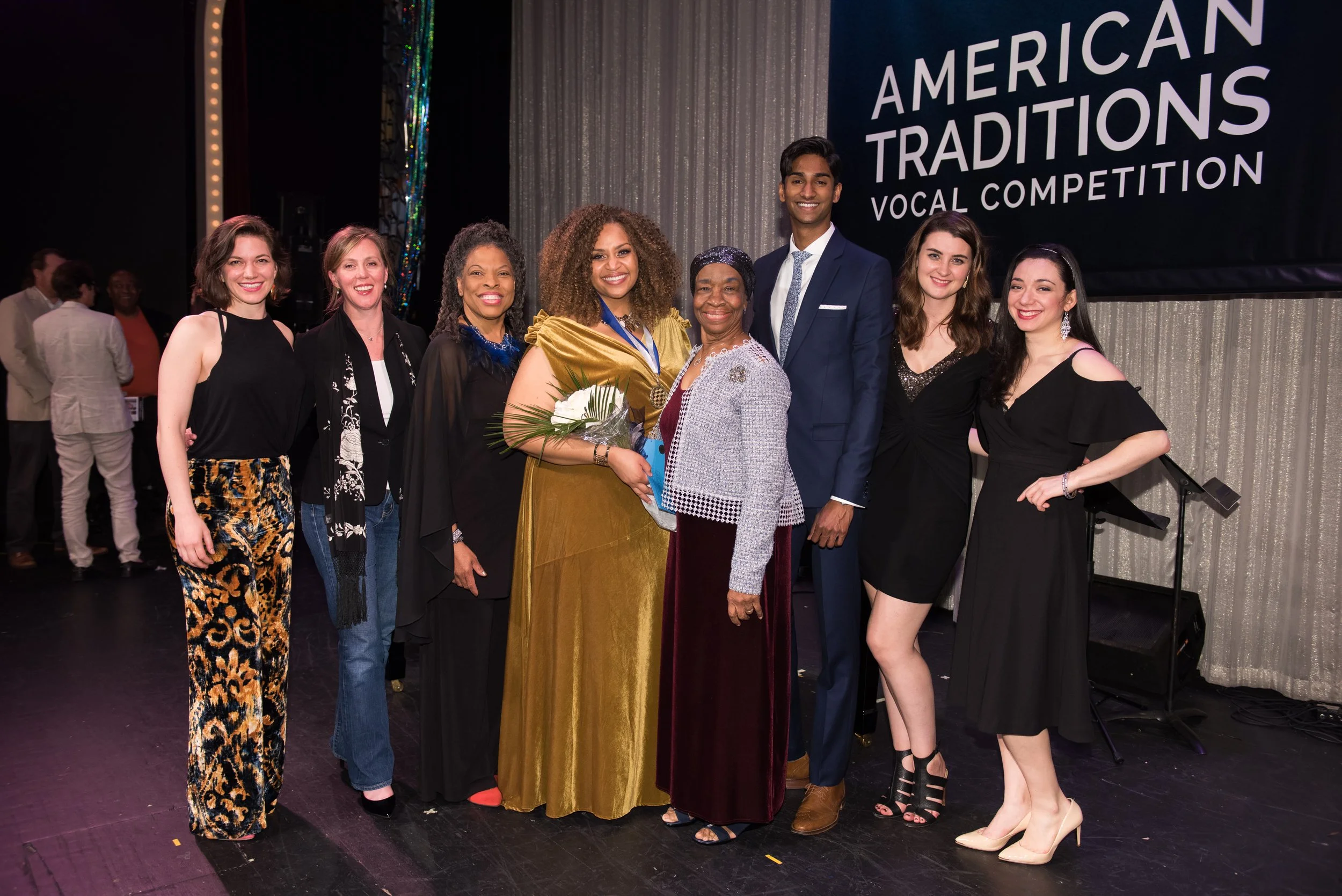
The American Traditions Vocal Competition was born of the desire to foster and preserve traditions of musical expression that have been significant in the culture of the United States, both in past eras and at the present time. In contrast to many music competitions that focus on European repertoire, we celebrate the repertoire that represents both the art and the popular cultures of our country.
The Competition embraces and recognizes the validity of the many performance styles that come from this repertoire. Some were born in the moment, in spontaneous expression, and at one time or another enjoyed widespread popularity. These musical forms evolved to incorporate identifiable characteristics of excellence and artistic integrity, and those qualities are the basis on which we judge.
More than one week a year
We operate year-round. We create and run educational offerings for audiences of all ages, working to inspire a love of American song with the next generation. We work with older generations who already know these songs and seek the comfort of familiar tunes continuing to engage modern audiences. We propel students toward success through individualized training in our major educational initiative, the Junior ATC. We craft world-class concerts featuring performers associated with the ATC, and we source and engage celebrated performers of all genres to adjudicate our professional competition.
How we got here
The competition was conceived in 1993 and first took place in 1994, as part of Savannah Onstage, now the Savannah Music Festival. Stewart Gordon, the first Artistic Director of both organizations, alongside Elizabeth Stewart, the Executive Director, designed the competition on the traditional classical competition model but drew its repertoire entirely from American music: Jazz, Pop, Broadway, Hollywood, Gospel, Spirituals, and Art Songs by American composers. The focus was truly unique, and it drew gifted young singers quickly.
Our judges were luminaries from the start. Over the years the ATC has been adjudicated by musical experts from across the spectrum: opera singers such as Lawrence Brownlee, Denyce Graves, Jubilant Sykes, George Shirley, Sherrill Milnes, William Warfield, Sylvia McNair, and Rod Gilfry; Broadway performers Kate Baldwin, Morgan James, Phillip Lamar Boykin, Chapman Roberts, Ron Raines, Liz Callaway, Kristen Blodgette; composers Sheldon Harnick, Michael Ching, Ricky Ian Gordon, Andrew Lippa, Martin Charnin, Charles Strouse, Jacqueline Hairston and Jim Wann; singing actresses like Marni Nixon, Celeste Holm, Jane Powell, Della Reese and Shirley Jones; and jazz greats such as Sheila Jordan, Kurt Elling, Ronnie Wells, Jane Monheit, Margaret Whiting, Marilyn Maye, Cyrille Aimée, Janis Siegel, and Dr. Ysaye Barnwell, among so many others.
We became an independent organization in 2010. Over the years the competition has been staged in some of Savannah's most storied rooms, from First African Baptist Church to the Lucas Theatre. After a stretch on Skidaway Island, and in a return to our roots, we now hold our professional competition and the bulk of our programming in downtown Savannah venues.
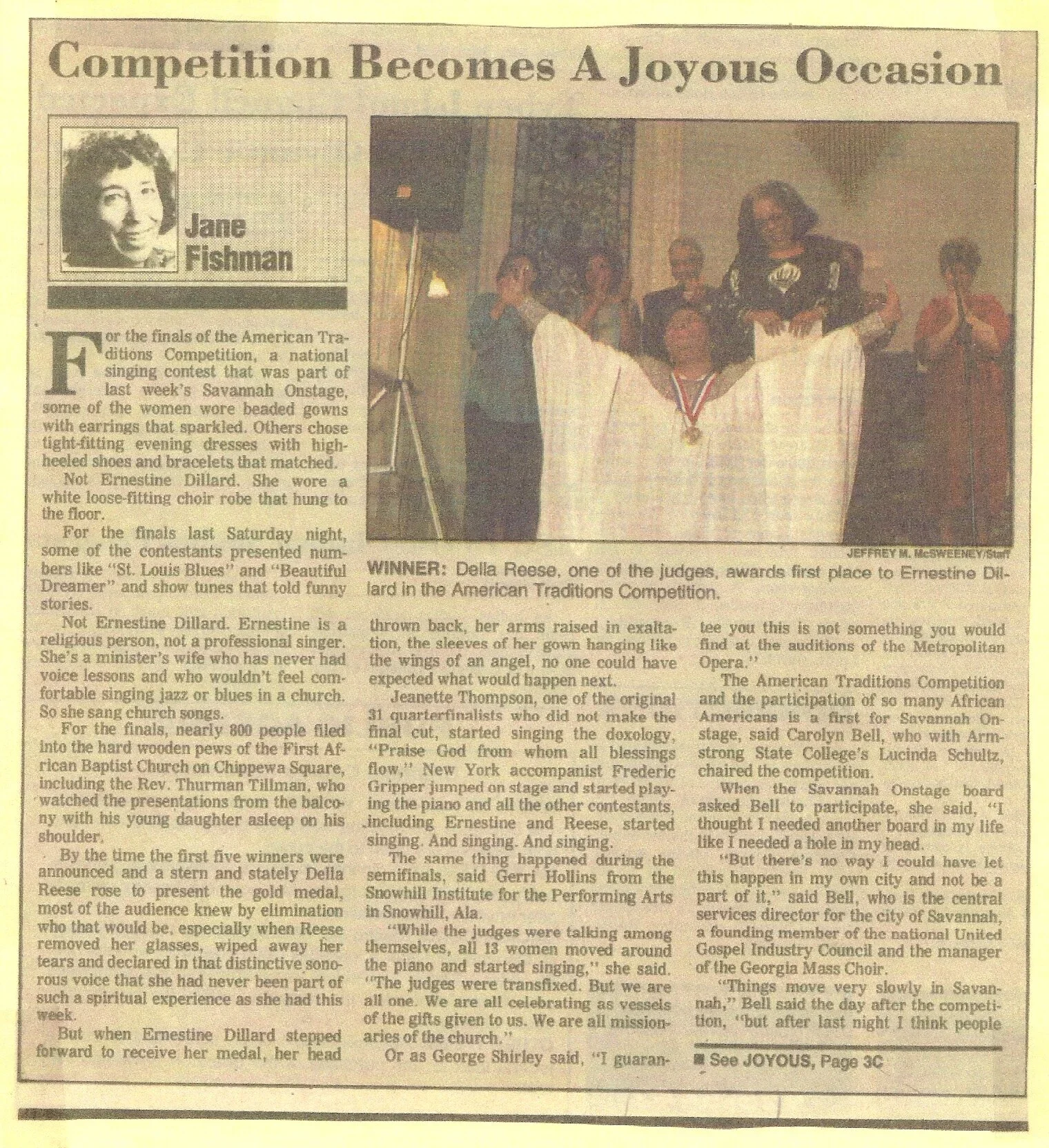
Our first-ever winner was the beloved Ernestine Dillard, who was chosen to perform for the Memorial for the victims of the Oklahoma City bombing shortly after her win. Notable winners or our competition include Tituss Burgess, Nicole Zuraitis, Michael Maliakel, Julie Benko, Morgan James, Phillip Lamar Boykin, Robert Sims, Keri René Fuller, Bryonha Marie, Alysha Umphress, Dee Roscioli, Will Liverman, Christian Douglas, Dr. Erica Gabriel, Michael Preacely and many more.
We do this together
We believe we are all stronger together, and we happily partner with other organizations, including the Savannah Philharmonic Orchestra, the Savannah VOICE Festival, Georgia Southern University, Savannah Music Festival and the Friends of Johnny Mercer, locally. Outside of Savannah, we regularly collaborate with The Asheville Symphony and the Hilton Head Symphony Orchestra.
What we believe
We do not impose an upward age limit, we do not ask for a singer's gender, we acknowledge preferred pronouns, we encourage dialogue, and we work hard to create a space where each person's lived experience is welcomed. We welcome each artist as a full person, and encourage artistic expression.
We celebrate what makes the American musical canon so unique: we are a melting pot of rich, historic immigration combining with people native to this land. Our country’s history and culture are perpetually in motion, and we hope it always will be. At the heart of our beauty and strength as a people is not homogeneity, but the vast collection of cultures coexisting and intermingling to create the ever-changing culture of the United States of America.